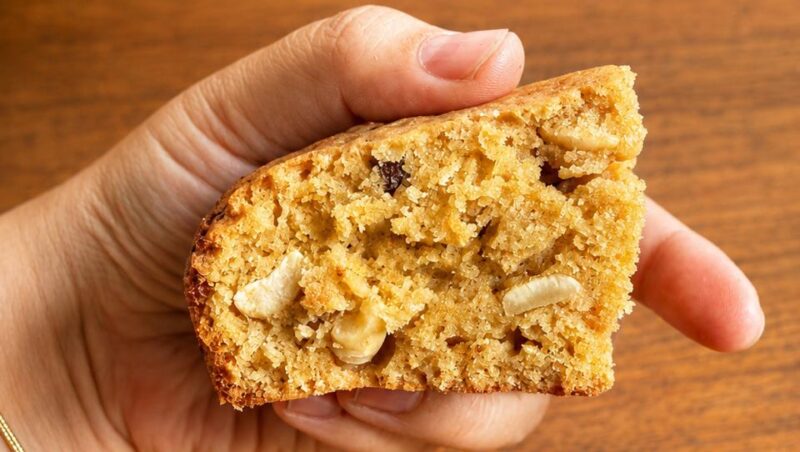
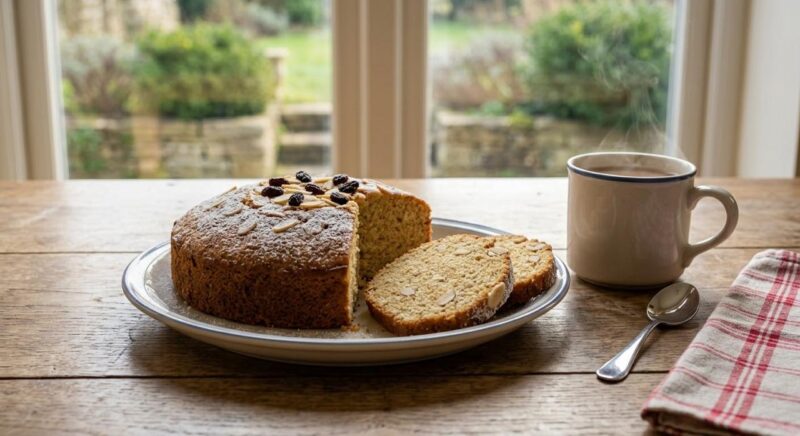
A super-soft vanilla cake is the perfect tea cake—simple, comforting, and impossible to resist. It practically melts in your mouth, and when you add a handful of dry fruits, you get the perfect little crunch in every bite while still enjoying that soft, tender cake.
This is the first cake I learned to bake for family occasions. In the beginning, every time I baked it, I would feel a little nervous, wondering if the cake would come out perfectly. But with time, this soft vanilla cake recipe became one of those reliable favourites that I could bake with confidence.
The best part about this vanilla cake is that it is incredibly simple. You don’t need any fancy ingredients or anything that isn’t already in your pantry. Just a few basic ingredients come together to make a soft, delicious cake that my family absolutely loves.
It’s now one of our family’s favourite cakes, and I hope it becomes a favourite in your home too!
Ingredients
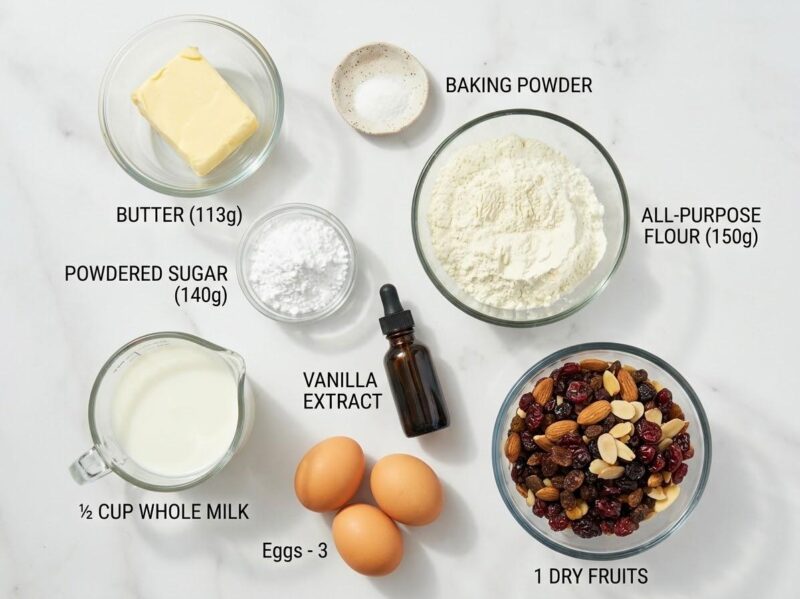
Butter — 113 g
Powdered sugar — 140 g
All-purpose flour — 150 g
Eggs — 3
Baking powder — 1½ tsp
Milk — ½ cup
Vanilla extract — 1 tsp
Dry fruits — 1 cup
Method
- In a large bowl, whisk the butter and powdered sugar until creamy and smooth. Add the milk and mix well. Add the eggs one at a time, whisking well after each addition.
- In a separate bowl, combine the all-purpose flour and baking powder. Gradually add the dry ingredients to the wet mixture and gently mix until just combined. Do not overmix.
- Add the vanilla extract and mix gently. Fold in some of the dry fruits. Reserve a little to sprinkle on top. Pour the batter into a greased and lined cake tin. Sprinkle the remaining dry fruits over the top.
- Bake in a preheated oven at 330°F (165°C) for 35 mins or until the cake is baked through and a toothpick inserted in the center comes out clean. Allow the cake to cool before slicing and serving.
You must be wondering – just four steps, and you are done. Yes, you just have to put all the ingredients together after measuring and fold it gently. Follow below mentioned FAQs for more perfection.
Frequently Asked Questions – Vanilla Cake Recipe
1. Why do you cream butter and sugar together when making vanilla cake?
Creaming butter and sugar helps incorporate air into the mixture, which contributes to a lighter and softer cake. The sugar also helps create a smooth, well-aerated batter when combined properly with the butter.
2. Why are eggs added to the vanilla cake batter?
Eggs help provide structure, moisture, and richness to the cake. When incorporated properly, they also help create a lighter and fluffier texture.
3. Why should you avoid overmixing the cake batter?
Overmixing can develop too much gluten in the flour, which may make the cake dense, chewy, or less tender. Once the flour is added, mix only until the ingredients are combined.
4. Is baking powder enough to make this vanilla cake rise?
Yes. The baking powder in this recipe provides the leavening needed to help the cake rise during baking. It releases carbon dioxide when activated, creating bubbles that contribute to the cake’s airy texture.
5. What happens to the air bubbles during baking?
The air incorporated while mixing, along with the carbon dioxide produced by the baking powder, forms bubbles in the batter. As the cake heats in the oven, these bubbles expand and help the cake rise.
6. Does sugar help keep vanilla cake moist?
Yes. Sugar does more than add sweetness—it also helps retain moisture in the cake. This contributes to a softer and more tender texture.
7. Why is milk added to vanilla cake batter?
Milk adds moisture to the batter and helps create a soft, tender crumb. It also contributes to the cake’s overall richness and smooth texture.
8. How do you make sure your vanilla cake stays soft and fluffy?
Measure the ingredients accurately, cream the butter and sugar properly, avoid overmixing after adding the flour, and bake the cake only until it is done. Overbaking can cause the cake to lose moisture and become dry.
9. Why your vanilla cake become dense?
A dense cake can result from overmixing the batter, incorrect ingredient measurements, too little leavening, or overbaking. Make sure your baking powder is fresh and mix the batter gently once the flour is added.
10. How do you know when your vanilla cake is fully baked?
Insert a toothpick or cake tester into the center of the cake. If it comes out clean or with a few moist crumbs, the cake is usually ready. Avoid opening the oven repeatedly while the cake is baking, as this can affect its rise.
Homemade vanilla cake is pure bliss! Soft, fluffy, and full of delicious vanilla flavour, this simple cake is sure to become a family favourite. If you don’t eat eggs, then you should definitely try our eggless vanilla cake recipe.
With the festive season just around the corner, this cake makes the perfect homemade treat for your guests. Try this easy vanilla cake recipe, and I’m sure you’ll love every bite!